
Fitch Ratings on Thursday said the resurgence of COVID-19 infections may delay India's economic recovery, but won't derail it, as it kept the sovereign rating unchanged at 'BBB-' with a negative outlook. It projected a 12.8 per cent recovery in GDP in the fiscal year ending March 2022 (FY22), moderating to 5.8 per cent in FY23, from an estimated contraction of 7.5 per cent in 2020-21. Fitch had in June last year revised outlook for India to 'negative' from 'stable' on grounds that the coronavirus pandemic had significantly weakened the country's growth outlook and exposed the challenges associated with a high public debt burden.

'We can go somewhere between 35 per cent and 40 per cent.'

Some analysts argue that Beijing has been too cautious in lowering rates and freeing up cash in the banking system, keeping real interest rates too high given low returns on investment.

China criticised western attempts to "demonise" the BRICS.

As per OECD's September estimates, global growth was to be 3 per cent this year and 3.6 per cent in 2016.

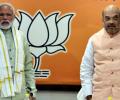
Corporate leaders said a stable government at the Centre will help boost infrastructure spend, address agricultural distress, and encouraging employment.

Singh asserted that the domestic challenges of India's economy were daunting in their complexity and devastating in their impact on the society.

The Indian economy is reviving, helped by positive policy actions.

The actual expenditure will only be marginally higher and hence, the multiplier effect will be muted.

Speaking at industry association CII's annual session, PM Modi said the government has taken tough steps to fight the coronavirus pandemic and has also taken care of the economy. "On the one hand we have to safe the lives of our people and on the other hand we have to stabilise the economy and speed up the economy," he said. "Yes, we will definitely get our growth back," he asserted.

Amid imminent phasing out of the fiscal stimulus by US Federal Reserve, Prime Minister Manmohan Singh on Wednesday called for an "orderly exit" from unconventional monetary policies being pursued by the developed world for the last few years to avoid damaging growth prospects of the developing world.

"India's economy is projected to sustain a 7.6 per cent growth rate in both fiscal years 2016-17 and 2017-18," says the year-end update of the flagship report Economic and Social Survey for Asia and the Pacific 2016 of the United Nations Economic and Social Commission for Asia and the Pacific (ESCAP).

The stock market, the Survey felt, had run away from underlying real economy indicators and asked if this indicated rational confidence or irrational exuberance.

The outlook for India's rating would improve if fiscal, inflation and infrastructure metrics get better, a global report said.

'Auto, pharma, and industrials have delivered well in the recent quarter, while businesses like quick-service restaurants, consumer staples, and durables have underperformed in volume growth.'

'The only thing that is safe right now are government securities.'

Indicators show green shoots in the economy with electricity and fuel consumption, inter and intra-state movement of goods, PMI data and retail financial transactions witnessing a pick-up, she said.

GST stabilisation, DTC implementation and banking reforms are crucial for sustaining high growth for a long period, says Rashesh Shah.

Modi said New Delhi has emphasised on dialogue and diplomacy along with restraint to deal with the situation arising out of the Hamas-Israel conflict.

'Good investment opportunities should not be missed.'

According to the global financial services firm, FY16 would be a notable year for India with gradual improvement in economic growth and declining inflationary pressures amid falling global commodity prices and policy initiatives.

'Das is friendly, but he finally does what he does. The quality of engagement is very good.'

Facing the twin task of fighting the coronavirus pandemic today and building a better tomorrow, the world is experiencing a new Bretton Woods moment, IMF managing director Kristalina Georgieva said
S&P has maintained a stable outlook on the basis of their expectation that over the next two years the growth will remain strong and India will maintain its sound net external position and fiscal deficit will remain elevated but broadly in line with their forecast.

Domestic mutual funds (MFs) have kept their faith in the Indian stock market despite multiple headwinds all through 2022-23 (FY23), with their net flows into equities crossing the Rs 1.5-trillion mark for the second consecutive financial year. MFs pumped a net Rs 1.53 trillion into equities till March 1, 2023, the Securities and Exchange Board of India (Sebi) data shows, as compared to Rs 1.72 trillion in FY22. Since FY15, MFs have been net buyers of equities, except in FY21, when they sold a net Rs 1.21 trillion.

The recent rupee depreciation and capital outflows could adversely impact the country's economy.
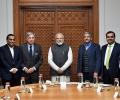
Further stimulus measures are expected in the upcoming Budget where the focus is likely to be on reforms, including some structural measures such as reducing red tape and boosting foreign direct investment. The meeting with industrialists is in the series of discussions that Modi has had during the last couple of weeks to seek suggestions to revive growth.

The only path to recovery of the economy lies in profit growth that triggers off employment growth, and finally investment, notes Ajay Shah.

The further expansion and upgrade of the Chinese military does not augur well for India, which continues to confront an increasingly belligerent China on its borders, notes former foreign secretary Shyam Saran.

With the Nifty50 just about 3 per cent away from its all-time closing high of 18,812 points, analysts at BofA Securities suggest investors book profit. Their reasons for the advice include risks like the possibility of a cut in corporate earnings growth forecasts, high valuation (one-year forward P/E of 19.5x), interest rates staying elevated for longer-than-expected and credit tightening. Going ahead, they expect the Nifty50 index to drop to 16,000 levels - down nearly 12 per cent from the current level of 18,255 points, which they believe would be a good time to buy.

The International Monetary Fund has said India should make its financial system more efficient and hasten structural reforms to sustain high economic growth, which averaged about eight per cent in the last three years. \n
The revenues do not include their business process outsourcing revenues. Which is exactly why Infosys Technologies is not included in the top 20 list.

Expenditure on new projects slowed down for the second quarter in a row amid an uncertain global environment and higher borrowing costs. There were new projects worth a cumulative Rs 3.26 trillion in the July-September period, according to data provided by project tracker Centre for Monitoring Indian Economy (CMIE). This figure is much less than Rs 4.39 trillion in the June quarter (Q1FY23) and Rs 8.46 trillion in the March quarter (Q4FY22).
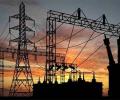
Bangladesh has sought revision of a 2017 power purchase agreement with Adani Power Ltd as the price for the coal-generated electricity appeared too expensive, officials said in Dhaka on Thursday. "We have communicated with the Indian company seeking revision of the agreement," an official of the state-run Bangladesh Power Development Board (BPDC) told PTI on the condition of anonymity and without elaborating on the matter. Media reports suggested that the "high coal price" to be purchased for the Adani plant at India's Jharkhand emerged as the key factor for the dispute.
"We see the Indian economy rebounding from our projected 6.1 per cent growth this fiscal year to something like 7 per cent in the next fiscal year (2020). We see the factors that will support growth, including monetary policy stimulus, working their way through the pipeline," Jonathan Ostry, Deputy Director, Asia Pacific Department at the IMF, told reporters.

'Earning expectations remain strong.'
'Since the growth is not fast enough to provide jobs for the young, the fallout will be political and social,' warns T N Ninan.

'The macro-economic stresses -- high interest rates, rupee depreciation and capital flows -- have receded now.' 'Interest rates have come down, inflation is down and the rupee has bounced back.' 'If oil prices continue at this level, there will be no vulnerability.' 'Growth is a different story.'

In a recent lecture, RBI governor Raghuram Rajan dished out some frank advice -- don't get into 'jugaad', instead try for the long haul. Only that will sustain in the long-run.
 © 2026 Rediff.com - Advertise with us - Disclaimer - Privacy Policy - Sitemap - Feedback - About us - Terms of use - Grievances